Global trial opens path to treatment
News
Global trial opens path to treatment
Treatment for X-linked retinitis pigmentosa is one step closer after promising results from an international study involving CERA and Cerulea Clinical Trials.
The landmark VISTA clinical trial has shown, for the first time, that gene therapy could become a future treatment option for the sight-threatening condition X-linked retinitis pigmentosa (XLRP).
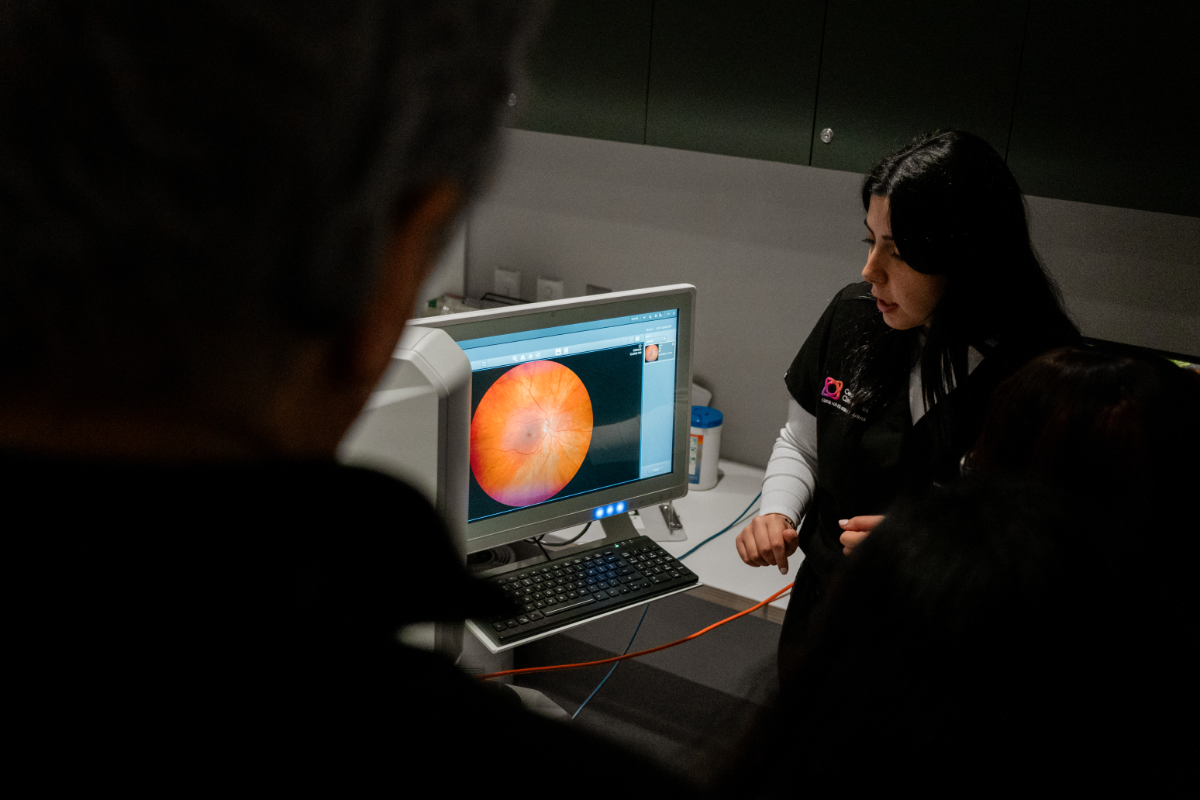
The trial was conducted at Cerulea Clinical Trials with local participants, as well as study sites in the US and Europe. It found that the gene therapy laruparetigene zovaparvovec (laru-zova) meaningfully improved vision in the majority of participants with XLRP as measured by low luminance visual acuity. This is a measure of how well you can see in dim lighting.
XLRP is a genetic condition that mostly affects males and typically begins in childhood. It degrades the light-detecting cells in the retina at the back of the eye, resulting in progressive vision loss and night blindness.
The positive results from the VISTA trial mean that laru-zova can now be evaluated for clinical use. If approved by regulators, it could become the first treatment available for thousands of people living with XLRP worldwide.
“This is Cerulea’s first gene therapy clinical trial and it’s had this terrific outcome,” says Dr Tom Edwards, Head of Retinal Gene Therapy Research at CERA and Principal Investigator on the VISTA trial.
“While the treatment still needs to be approved, the results are very encouraging. I expect that in future, this will be an option for patients with XLRP, one of the most common forms of RP,” he says.
World-first results
XLRP is most commonly caused by a change or ‘mutation’ in the RPGR gene on the X chromosome. In the VISTA trial, laru-zova was surgically administered into the eye to deliver a healthy copy of the RPGR gene to retinal cells, replacing the defective gene. Participants received either a high dose of the drug, a low dose, or no treatment at all.
The findings, published by the trial’s sponsor Beacon Therapeutics, showed that after 12 months a significant portion of treated patients (31% of the high dose group and 24.1% of the low dose group ) showed clinically meaningful improvements in dim-light vision. This was measured by a greater than, or equal to, 15-letter improvement in low luminance visual acuity, compared to the untreated control group. No participants in the control group demonstrated this level of improvement. The results also confirmed the safety and tolerability profile of laru-zova found in previous studies.
In people with XLRP, difficulty seeing in low light is one of the earliest symptoms as the disease targets the retina’s rod cells first, which are used for night vision.
For Dr Edwards, the results represent a significant research milestone.
“A few decades ago, there was nothing to give patients hope. Then, with the advent of gene therapy, there was definite hope, but no concrete outcomes. Now it’s moved beyond that and there is actually an investigational treatment that’s been shown to be effective in a clinical trial.
“That’s the sort of evolution that gives hope to patients, families and everyone involved in looking after people with X-linked RP caused by this particular gene,” he says.
A global leader in retinal clinical trials
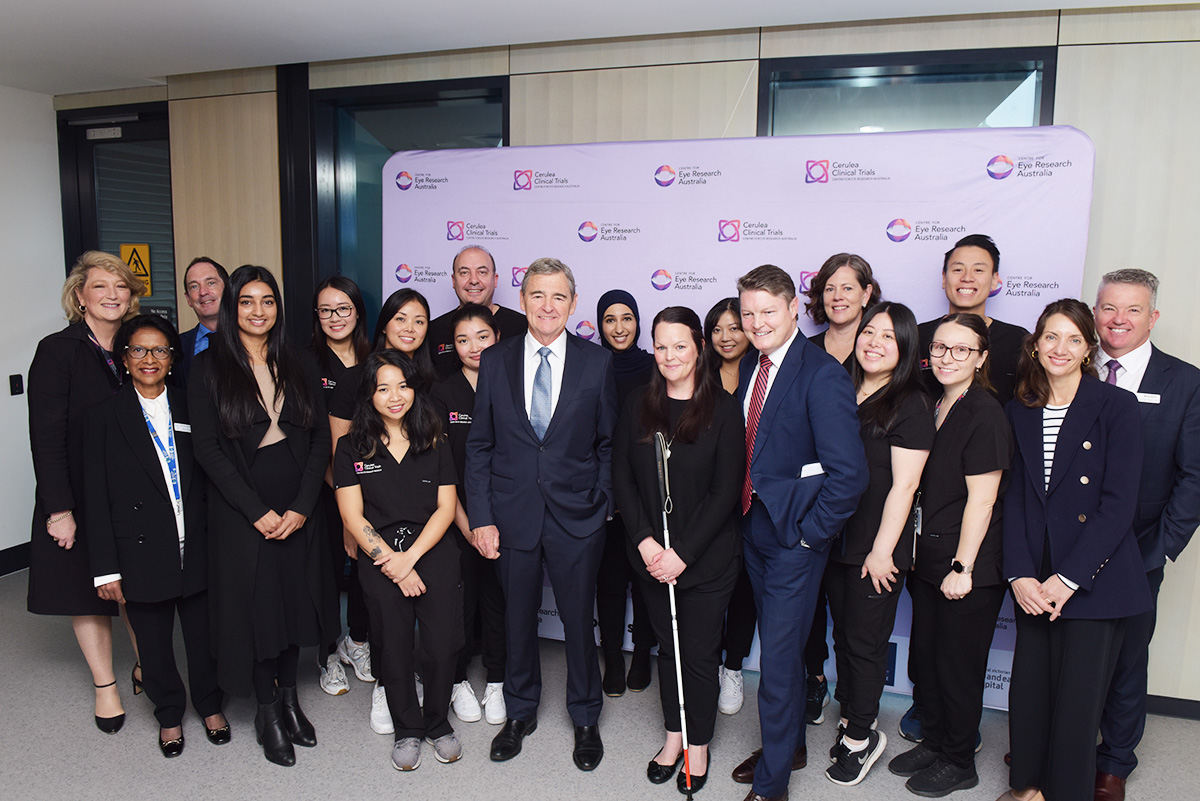
Cerulea Clinical Trials CEO Dr Michelle Bradney says the organisation is proud of the clinical research team and facilities that enable it to be involved in international trials like VISTA.
“Gene therapy trials are highly complex, with years of innovation and rigour behind them. The trial execution has to be of the highest quality to support the successful progression of these potential treatments through regulatory approval,” she says.
“We’re fortunate at Cerulea to have the world-class clinical trial infrastructure and capability to bring these sorts of progressive treatments to Australia.
“It’s transformative to have a positive result not only for people with X-linked RP, but also those with other inherited retinal diseases. It gives them genuine hope that there are sight-preserving therapies on the horizon.
“We congratulate Beacon, our research team involved in this trial, the advocacy organisations, and particularly the participants who have donated many hours of their time – without any assurance that the treatment is going to work.”
Local participants in the study were drawn from CERA and the University of Melbourne’s VENTURE registry – a database of around 800 people, who have or are carriers of inherited retinal diseases, including XLRP.
According to Dr Edwards, the registry plays an important role in getting more Victorians into trials for new drugs.
“The VENTURE registry provides us with the capability to quickly identify eligible patients when these international clinical trials become available, which positions Cerulea as a favourable study site,” he says.
Building research momentum
It is hoped the VISTA trial results will drive progress in other areas of CERA’s research, and gene therapy more broadly.
CERA Research Fellow Dr Sena Gocuk investigates how inherited retinal diseases like XLRP affect female ‘carriers’ of the disease. While all men with XLRP progressively lose vision, women present differently – some experience few symptoms, while others develop significant vision loss akin to males.
Because this complex biology is not yet fully understood, female carriers couldn’t be included in the VISTA trial.
“The positive results from the VISTA trial are an exciting step forward. However, the study also highlights the need to better understand how emerging gene therapies may also benefit female carriers,” says Dr Gocuk.
“We hope to build the evidence needed to advocate for their inclusion in future clinical trials and access to treatments as they become available,” she says.
Dr Edwards believes that the results of the VISTA trial will renew enthusiasm and motivation for other gene therapy clinical trials.
“It’s a great boost for the researchers and hopefully also encourages more participants to get involved,” he says.
Dr Bradney agrees, “It provides validation for continued investment in ophthalmology, and more broadly, in rare disease research. Once a company has cracked the code, then everyone feels it’s possible, creating the momentum necessary to accelerate future innovative treatments”.
Find out more
- If you would like to take part in clinical trials at Cerulea, you can register your interest.
- Health professionals are invited to join CeruleaCONNECT to learn about recruiting clinical trials and refer eligible patients.
- For more information, and to get in contact with the VENTURE team about the registry, please email: IRD@groups.unimelb.edu.au.