Trial results put treatment in reach
News
Trial results put treatment in reach
Research conducted at CERA and Cerulea Clinical Trials points toward a potential first treatment for Stargardt disease – a sight‑threatening genetic condition.
The international Phase 3 DRAGON trial – which included local participants from Cerulea Clinical Trials – has investigated whether the drug tinlarebant can treat the sight-threatening condition Stargardt disease type 1, and has indicated it’s capable of slowing the condition’s progress.
The findings – which included local participants from Cerulea Clinical Trials – are a step towards a potential first treatment for the condition, which affects approximately 1 in 10,000 people.
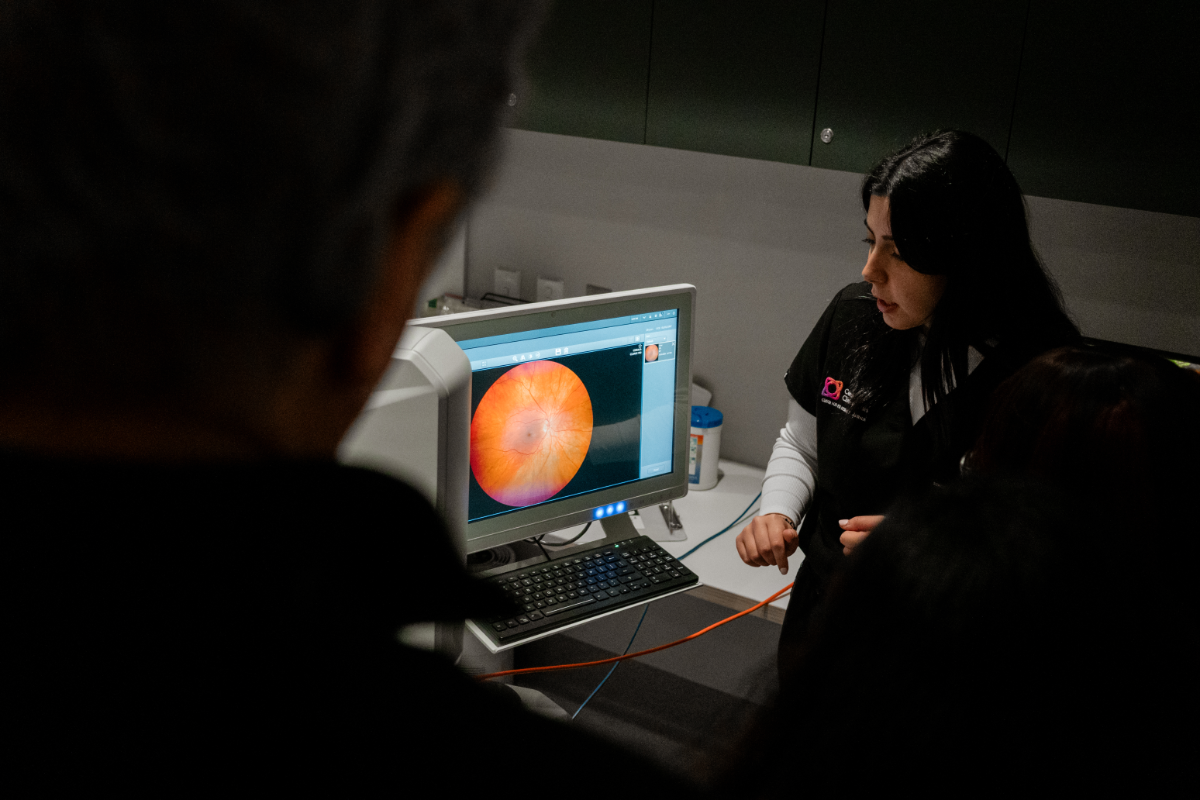
Stargardt disease affects the retinal cells in the macula – the region of the eye responsible for central vision. It’s a disorder caused by a genetic fault that leads to the degeneration of the retinal cells, leading to progressive central vision loss.
Stargardt disease can occur at any age between teenage years through to early and mid-adulthood. Currently, there is no approved treatment.
Moving closer to treatment
The findings, published by the drug’s sponsor Belite Bio, showed that over two years, a daily tablet slowed the growth of these lesions by 36 per cent. Adverse events, when reported, were generally mild and consistent with tinlarebant’s mechanism of action.
The findings move the drug one step closer towards being approved by regulators as a treatment for the condition.
“Stargardt disease is one of the most common inherited retinal diseases and the most common macular dystrophy,” says Dr Tom Edwards, Head of Retinal Gene Therapy Research at CERA.
“It’s a very welcome result and satisfying that CERA and Cerulea Clinical Trials had a part to play in it.
“I’m certain it’s even more satisfying for the participants, without whom we couldn’t complete trials like this.”
Local participants in the study were drawn from CERA and the University of Melbourne’s VENTURE registry – a database of close to 800 people, who have or are carriers of genetic conditions that affect sight, including Stargardt disease.
VENTURE provides a way to study how these diseases progress, and its registry is a crucial way of getting people into trials for new drugs.
The power of clinical research
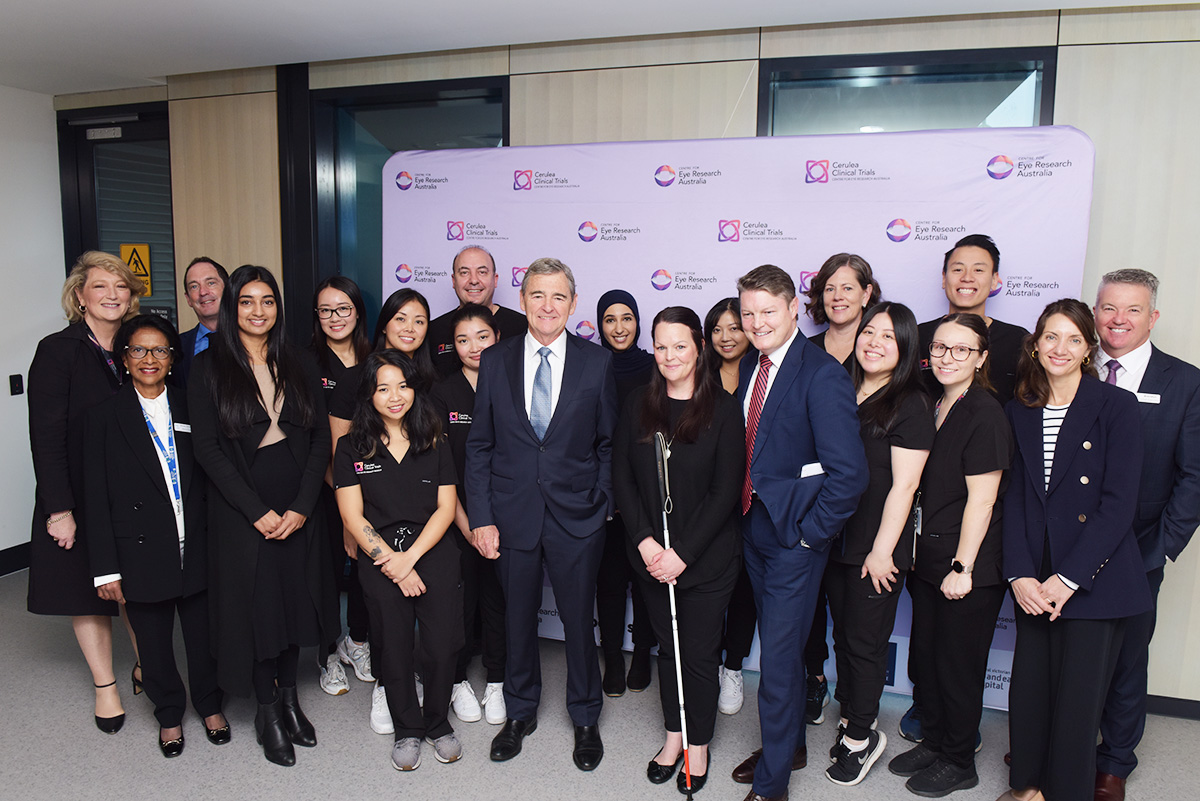
Cerulea Clinical Trials Chief Executive Officer Dr Michelle Bradney says the organisation is proud to have played a critical role in the successful completion of the study.
“This is an accomplishment that reflects exceptional expertise and collaboration across our internal teams, but also as a trusted partner of Belite Bio,” she says.
Dr Bradney explains that Stargardt disease presents a unique set of challenges for clinical research. The disease can progress differently from person to person, and it requires highly specialised assessments and multidisciplinary care. Identifying and supporting eligible patients through clinical trials can be complex, and takes a high level of precision, technical capability and compassion.
“Cerulea has a strong commitment to advancing potential new therapies that make a difference to people living with vision loss and blindness,” she says.
“We are honoured to have contributed to this clinical trial and would like to acknowledge the bravery and altruism of our participants who make the decision to participate in novel research.
“Their commitment is what makes these results possible and gives hope for a potential therapy that could change the future of Stargardt disease care.”
People interested in joining studies at Cerulea can register their interest.